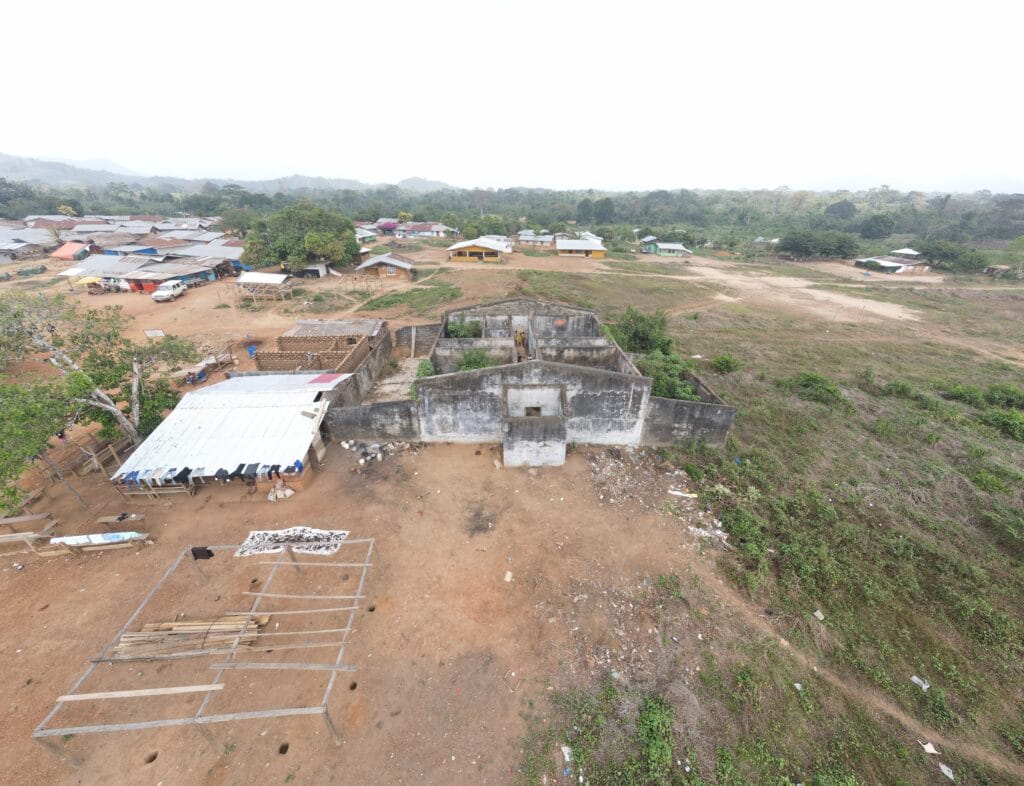
“After five hours on rough roads from Bopolu, we finally reached Belleh Yellah. It was smaller than we had imagined. Much smaller. For generations, Liberians spoke of this place with fear, envisioning a vast prison hidden deep within the rainforest. Standing there, surrounded by silence, it was hard to believe that one of the country’s most notorious prisons occupied so little space.”
For decades, there was no road to Belleh Yellah. The prison could only be reached by helicopter, a deliberate decision that reinforced its reputation as Liberia’s most isolated prison. Surrounded by dense rainforest and hundreds of kilometers from Monrovia, escape was virtually impossible.
Residents who lived through this remarkable period shared extraordinary firsthand accounts of helicopters arriving with prisoners, attempted escapes into the unforgiving forest, and daily life in one of Liberia’s most isolated communities. One elderly woman told us, “I had never seen a car in my life,” recalling the day the first road finally reached Belleh Yellah in 2007. Their memories preserve a chapter of Liberian history that cannot be found in archives alone.
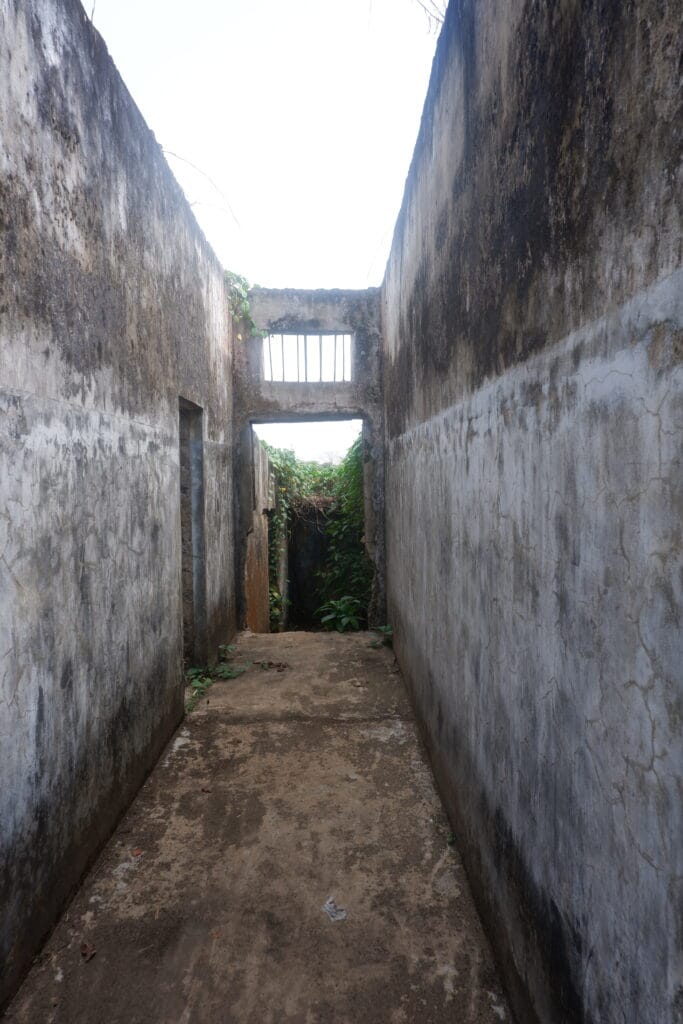
Perhaps the greatest surprise was the prison itself.
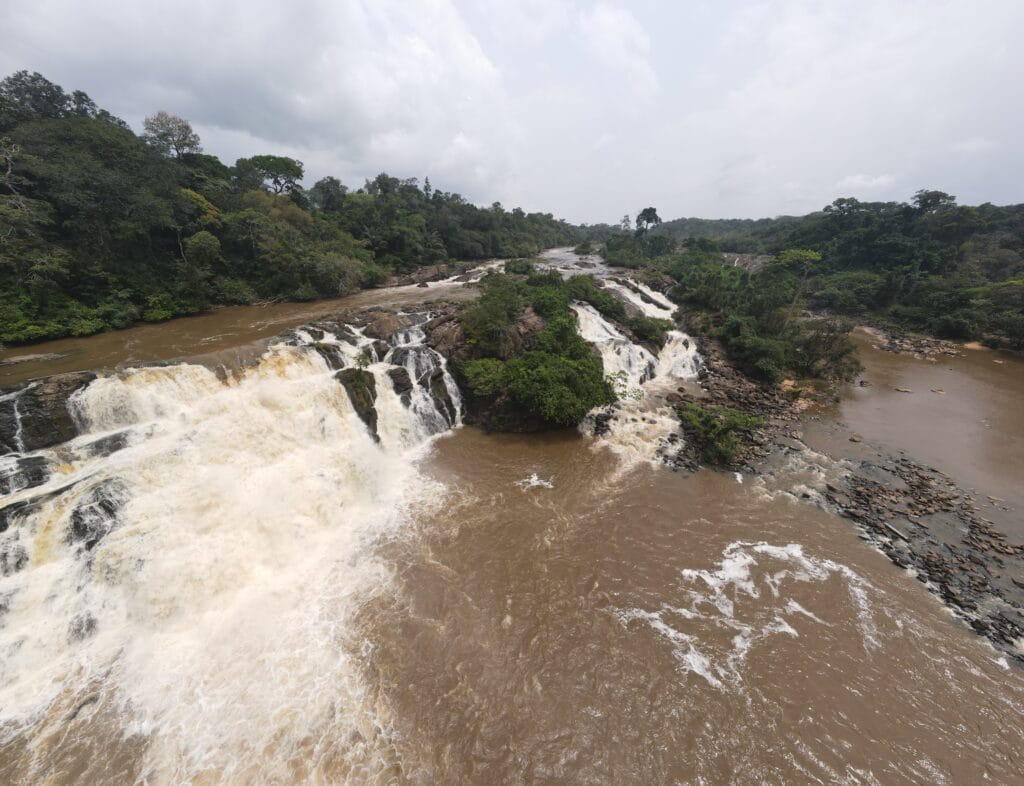
Like many Liberians, we imagined Belleh Yellah as a sprawling prison complex. After driving for hours from Bopolu through remote villages and crossing rivers—including passing one of Liberia’s spectacular waterfall communities—we finally arrived. The reality was startling. The prison was remarkably small.
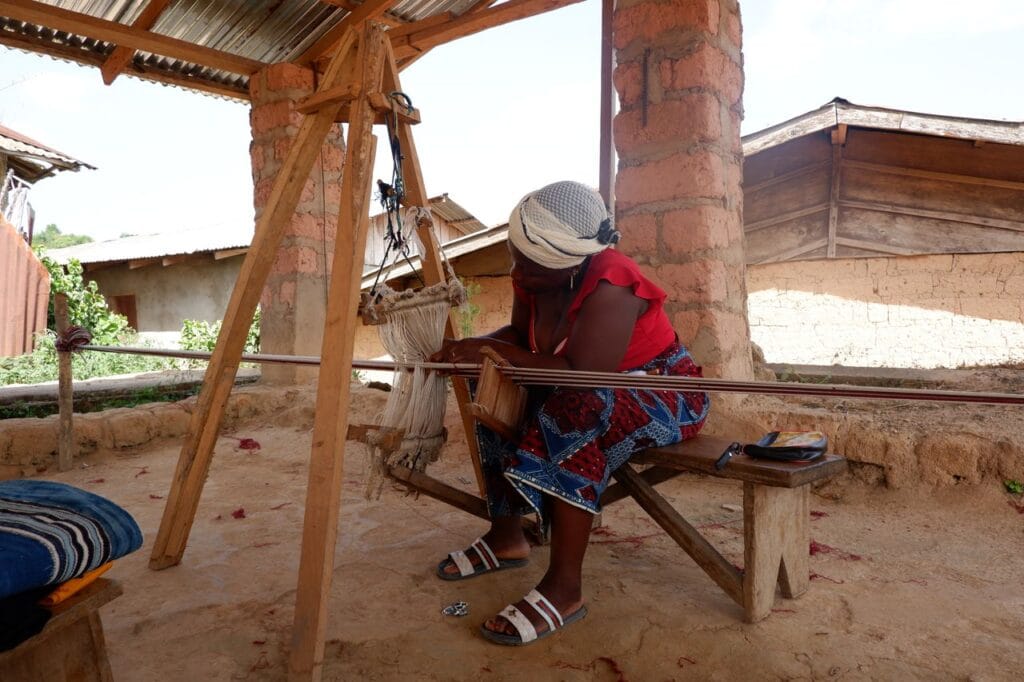
Walking through its narrow corridors, it was difficult to reconcile the modest buildings before us with the enormous place Belleh Yellah occupies in Liberia’s national memory. Today, silence has replaced the echoes of confinement. The surrounding rainforest has reclaimed much of the landscape, while the community welcomes visitors with warmth and hospitality.
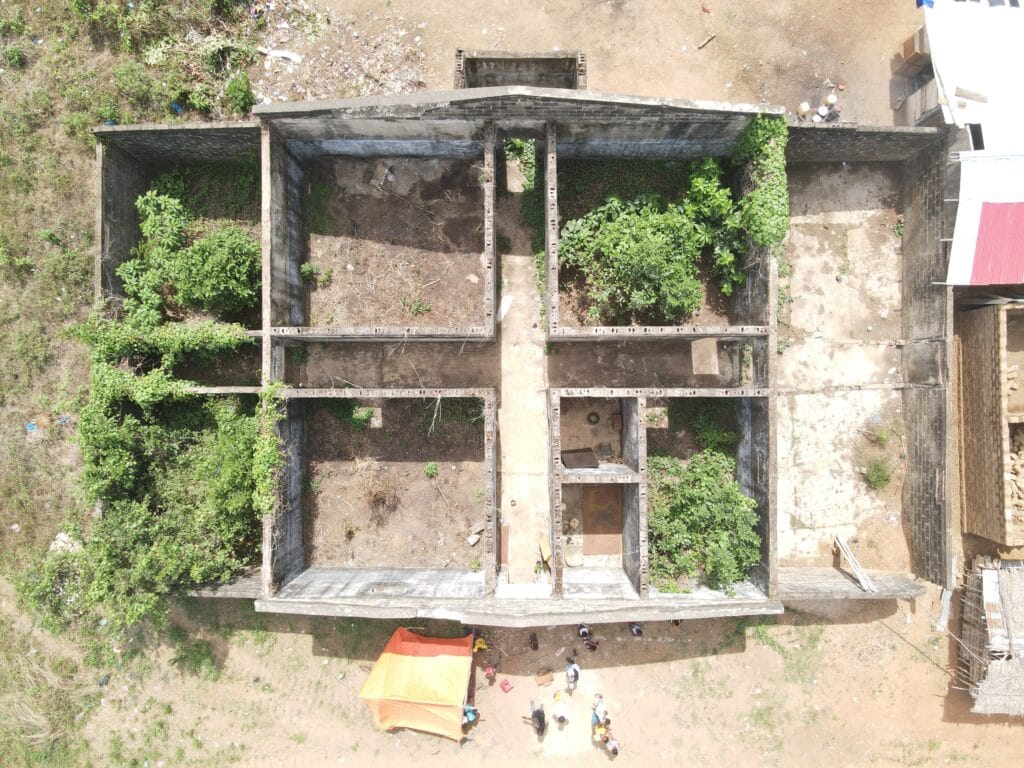
Belleh Yellah reminds us that history is not always found in grand monuments. Sometimes it lives in quiet places, preserved by the people who remember.
By Hesta Baker