Long before Liberia became a republic, before counties were established and borders were drawn, powerful kingdoms and visionary leaders shaped the destiny of this land.
Among the most influential was King Sao Boso Kamara, also known as King Boatswain—a legendary warrior, respected ruler, and one of the most significant indigenous leaders in Liberia’s early history.
His story is more than one of conquest.
It is a story of leadership, diplomacy, and a moment that helped influence the future of a nation.
In the early 1800s, as the first settlers arrived on the Grain Coast under the American Colonization Society, tensions grew between the new settlement and surrounding indigenous communities. Disputes over land, misunderstandings, and competing interests threatened the survival of the fledgling colony.
It was during this pivotal period that King Sao Boso emerged as a statesman.
As a leader of the Condo Confederation, he played a central role in helping negotiate peace between indigenous leaders and representatives of the American Colonization Society. During the 1821 negotiations for land on which freed Black settlers from the United States would establish a colony, Sao Boso used his influence to help broker agreements that eased tensions and created a path toward coexistence.
His authority carried considerable weight throughout the region. Backed by the powerful Condo Confederation, his leadership helped discourage further conflict involving neighboring Dei, Gola, and Vai communities, creating space for dialogue at a time when violence could have altered Liberia’s history.
Yet King Sao Boso’s legacy extends far beyond politics.
He became a bridge between cultures—a leader who recognized that peace required negotiation, mutual respect, and balance. His efforts remain one of Liberia’s earliest and most enduring examples of indigenous diplomacy.
According to oral tradition, King Sao Boso came from present-day Guinea to defend local communities against the feared Gola warrior Boga, who had been attacking traders traveling through the region. Following a decisive battle, Boga retreated, and Sao Boso established his kingdom in Bopolu, where he became one of the region’s most respected rulers.
His kingdom flourished long before modern Liberia existed. During his reign, present-day Gbarpolu County had not yet been established, and leadership was measured not by political boundaries but by influence, alliances, and the ability to unite and protect communities.
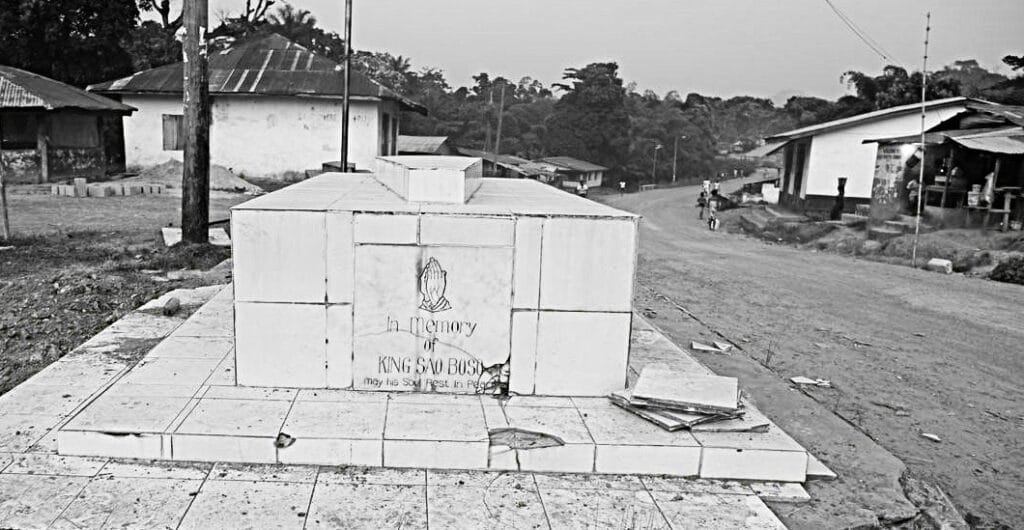
Today, King Sao Boso’s legacy lives on in Bopolu, where he is buried and where his descendants—including members of the Sions and Zenah families—remain connected to the community that became the center of his kingdom.
For travelers exploring Liberia’s historical landscape, Bopolu offers far more than a destination. It provides a rare opportunity to experience a place where oral history continues to preserve the memory of a leader whose influence helped shape the foundations of modern Liberia.
King Sao Boso Kamara was more than a warrior.
He was a diplomat.
A protector.
A peacemaker.
And one of the indigenous leaders whose legacy continues to shape Liberia’s story.
31 Days of Liberia 🇱🇷
Celebrating the people, places, and stories that define the heart of Africa’s oldest republic.