Home to the Berbers, Algeria is a confluence of culture and religion. Ancient times saw a transition from Christianity to Islam, alongside the heavy influence of the Romans. The Middle Ages ushered in scholars of the Fatimid period, named for Fatima, daughter of the Prophet Muhammad. Over the centuries, the region absorbed rich Roman, Berber, and Mediterranean influences. In the 1800s came the French occupation, which ruled Algeria until its hard-fought independence in 1962.
These pivotal periods have played a significant role in shaping the food, dress, religion, and vibrant culture of modern-day Algeria. Constantine, one of Algeria’s most spectacular commercial centers, was listed in 2018 as one of eleven ‘must-visit’ cities in the world by USA Today. Along with several other historic landmarks, it stands as a testament to the country’s profound history.
World Heritage Sites of Algeria
Béjaïa The historic city of Béjaïa was founded in 26 or 27 BCE and became one of the most prosperous in the Mediterranean and a center of great learning. The Citadel, the most important historic monument of the city, boasts a surface area of 20,000 square meters and is the result of cultural exchanges between Roman, Hammadid, Spanish, Turkish, French, and Arab-Muslim societies. It symbolizes an extinct cultural tradition and exhibits important periods in world history.
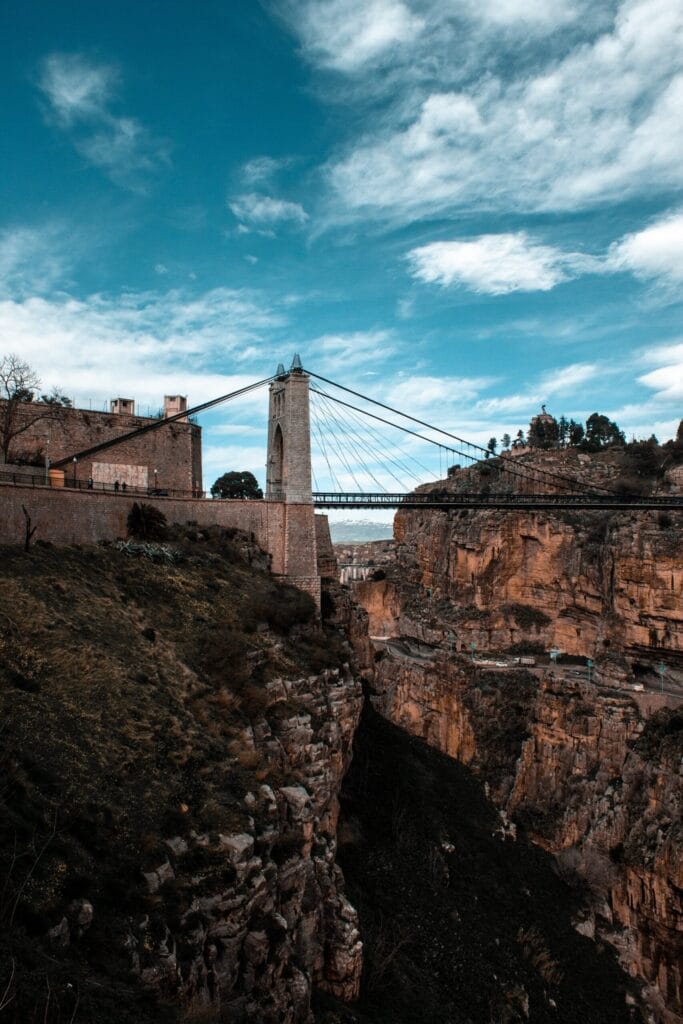
Constantine Constantine is one of the world’s oldest cities and was founded by the Phoenicians. Once completely destroyed, it was rebuilt shortly afterwards by Emperor Constantine, who named the city after himself. Today, Constantine preserves the historic relics of three millennia of Numidian, Roman, Muslim, Ottoman, and colonial occupation.
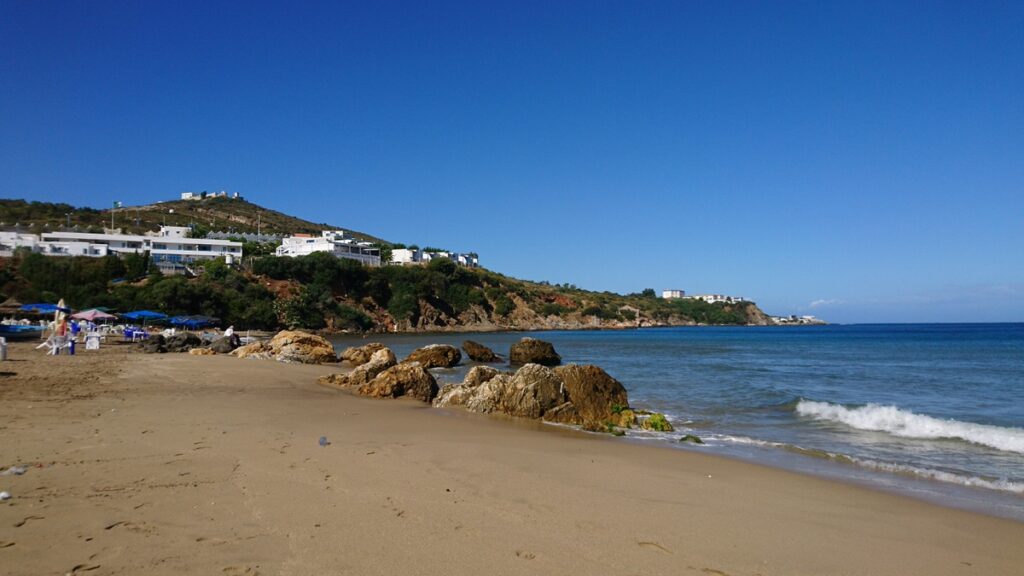
Djémila Inscribed on the World Heritage list in 1982, Djémila holds the remarkably preserved remains of an ancient Roman colony founded during the reign of Nerva. The site bears exceptional testimony to the Ancient Roman civilization and is an outstanding example of architectural design, illustrating a significant stage in the Roman history of North Africa from the 2nd to the 6th centuries.
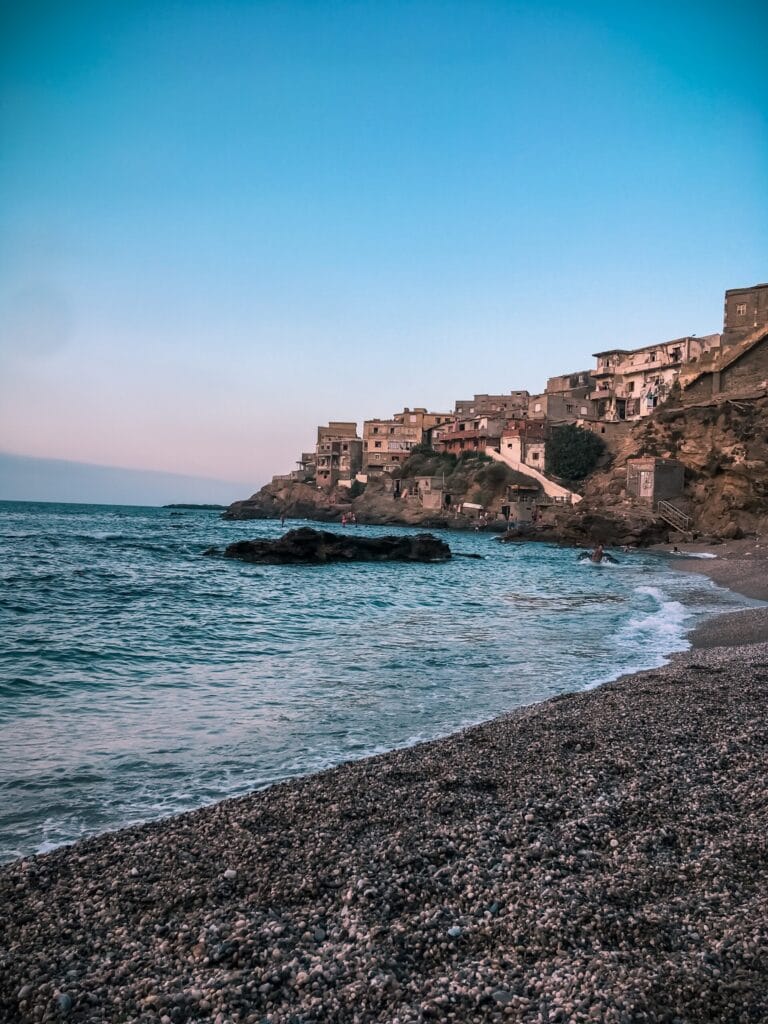
M’Zab Valley Located in the heart of the Sahara Desert, the M’Zab Valley is home to five fortified villages that form an extraordinarily homogenous ensemble. It displays the mark of a sedentary and urban civilization possessing a highly original culture that has preserved its cohesion perfectly throughout the centuries.
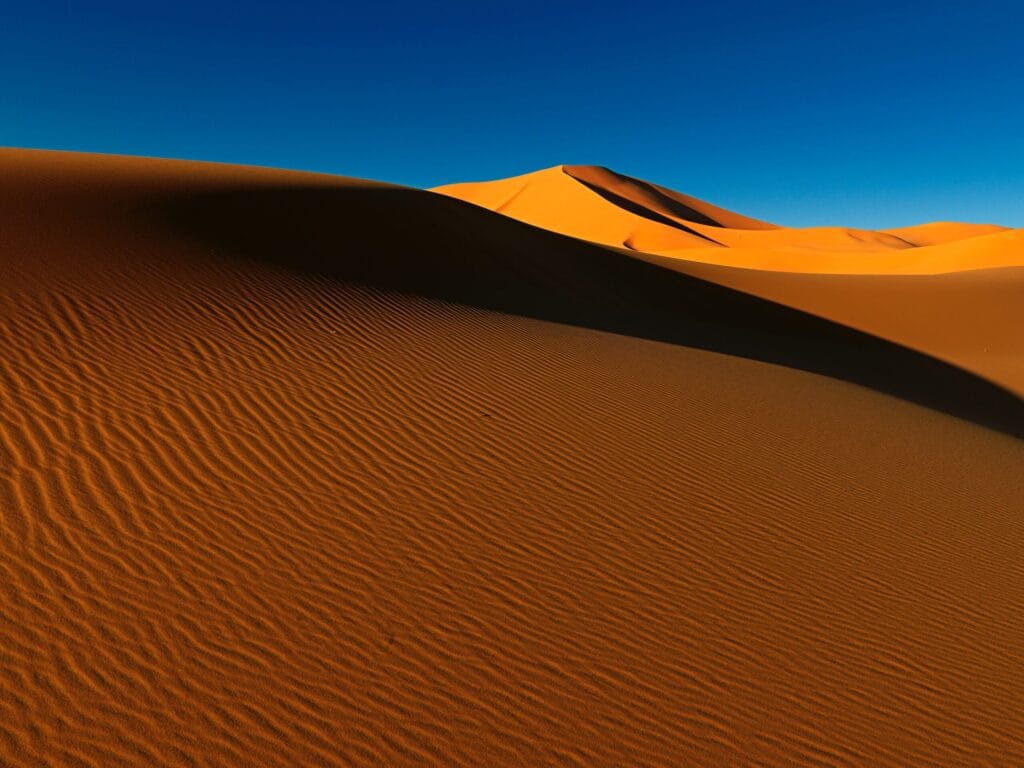
Al Qal’a of Beni Hammad Situated in a mountainous site of extraordinary beauty, Al Qal’a showcases the ruins of the first capital of the Hammadid emirs, founded in 1007 and demolished in 1152. Al Qal’a provides an authentic picture of a fortified Muslim city. This remarkable archaeological site is an ensemble of preserved ruins set on the stunning southern flank of Djebel Maâdid.
Timgad Timgad, with its square enclosure and orthogonal design, is an excellent example of Roman town planning. Set in a mountainous site of great beauty, the rapid growth of the city by the middle of the 2nd century ruptured the narrow confines of its original foundation. Timgad spread beyond the perimeters of its ramparts, resulting in major public buildings in the new quarters, including the Capitolium, temples, markets, and baths. Most of these buildings date from the Severan period when the city enjoyed its Golden Age, as attested by immense private residences.
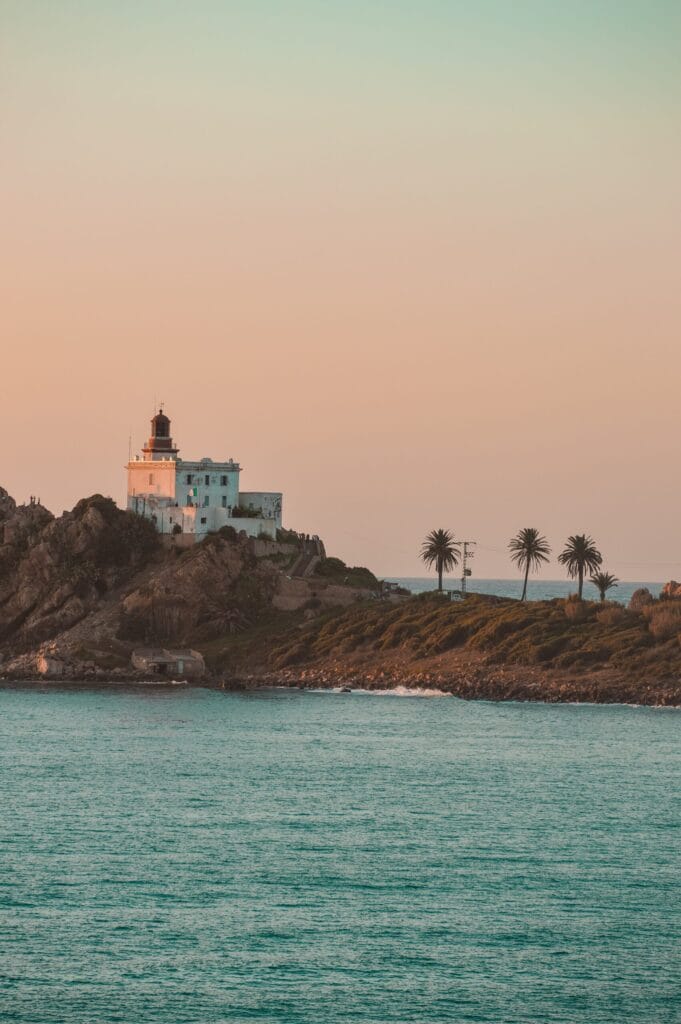
Tipasa On the shores of the Mediterranean is Tipasa, an ancient Punic trading post conquered by Rome and turned into a strategic base for the conquest of the kingdoms of Mauritania. It comprises a unique group of Phoenician, Roman, paleochristian, and Byzantine ruins alongside indigenous monuments such as the Kbor er Roumia, the great royal mausoleum of Mauretania. This coastal city is perhaps one of the most significant sites for studying the contacts between indigenous civilizations and the different waves of colonization from the 6th century B.C. to the 6th century A.D.
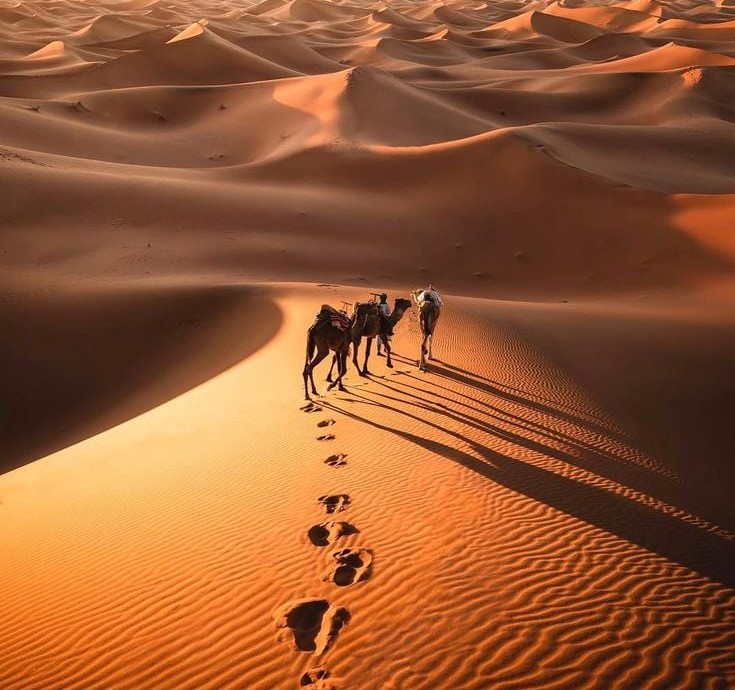
A Legendary Landscape Algeria’s legendary landscape, heavily defined by the majestic expanse of the Sahara Desert, draws over 2 million people annually to experience the magnificence of Africa’s largest country.
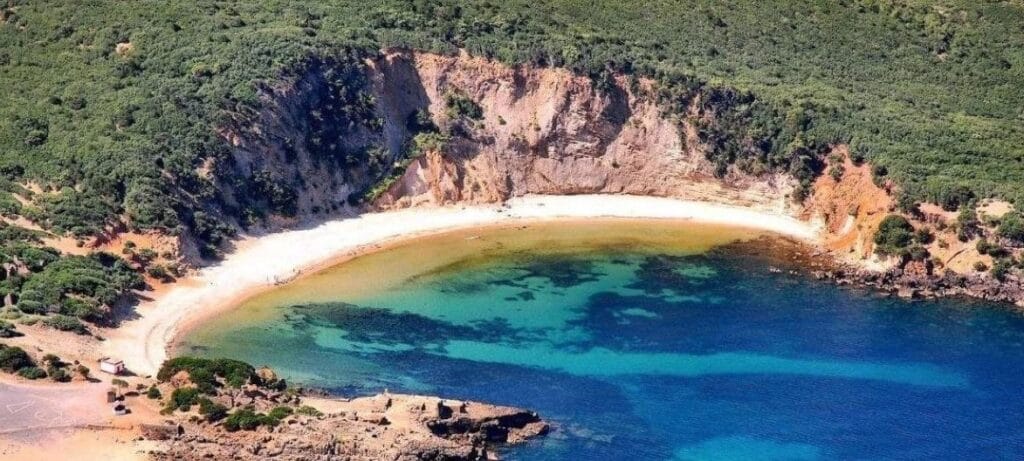
Beyond the dunes and heritage, Algeria’s iconic beaches rival the best in the world. The country offers something for everyone with over ten national parks—including the renowned Tassili and Ahaggar Cultural Parks—the vast mountains of Kabylia, ski areas such as Tikjda, and ancient hot springs that date back thousands of years.