
The Desert Remembers
Discover one of Africa’s most extraordinary desert landscapes and extreme travel experiences.
Unveiling a land once submerged beneath ancient waters, a place suspended in time, and a journey into one of the greatest open-air museums on Earth with Djaber Ouladheddar.
Tassili N’Ajjer feels like another world — a landscape so mysterious, surreal, and extraordinary that it could be considered one of Earth’s greatest wonders. Walking through this ancient desert is like stepping through the pages of history, where towering rock formations, forgotten valleys, and silent sands tell stories that began thousands of years ago.
As the desert shifts beneath your feet, you find yourself questioning reality — overwhelmed by the rare privilege of experiencing a moment so powerful it can only be understood by returning again.
For Africa Travel and Life, we spent three days exploring Tassili N’Ajjer through the eyes of Djaber Ouladheddar — a son of this land and a Tuareg storyteller whose connection runs generations deep. His ancestors were born here, lived here, traveled these ancient paths, and guided their camels across this vast wilderness.
Djaber does not simply photograph the desert; he understands it. He reads its landscapes, its silence, and its stories in a way only someone connected to the land can. Through his lens, Tassili N’Ajjer reveals itself — ancient, alive, and waiting to be heard.
His photography speaks.
And we listen.
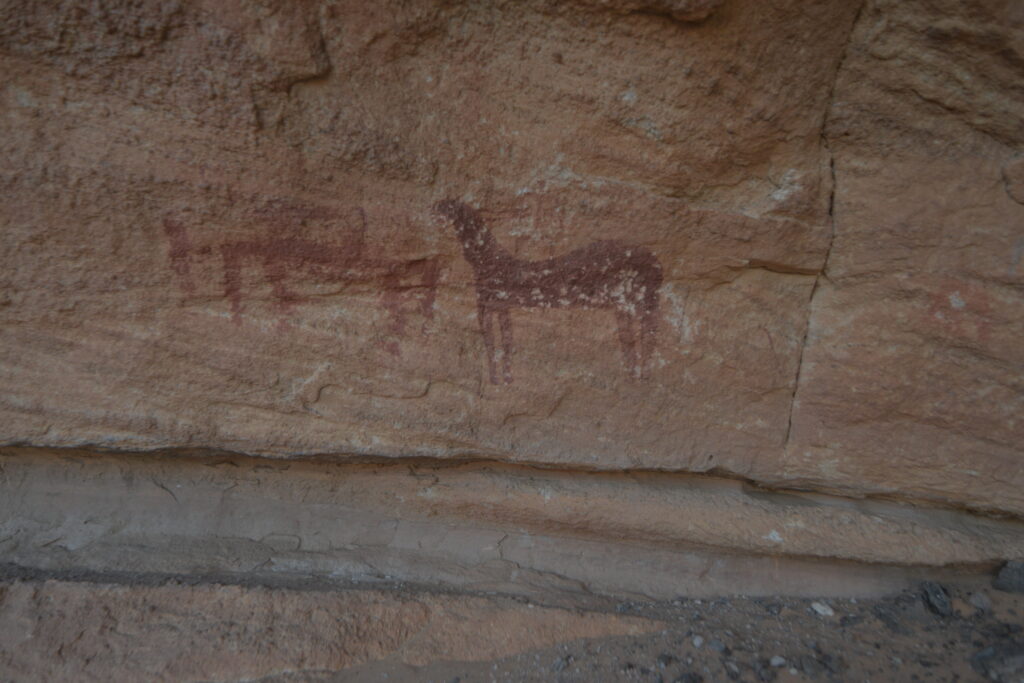
“They are scattered across Tassili N’Ajjer,” says Djaber, as he photographs this nearly hidden painting etched into a rock face several stories tall. Reaching some of these ancient artworks can take an entire day, revealing the immense scale and remoteness of this extraordinary part of the Sahara.
These ancient stone landscapes hold stories painted thousands of years ago — this one depicting a four-legged animal. The Tuareg who have lived and traveled across this land recorded their presence, movement, and survival. These markings are not simply remnants of the past; they are voices from the people who walked this land before us.
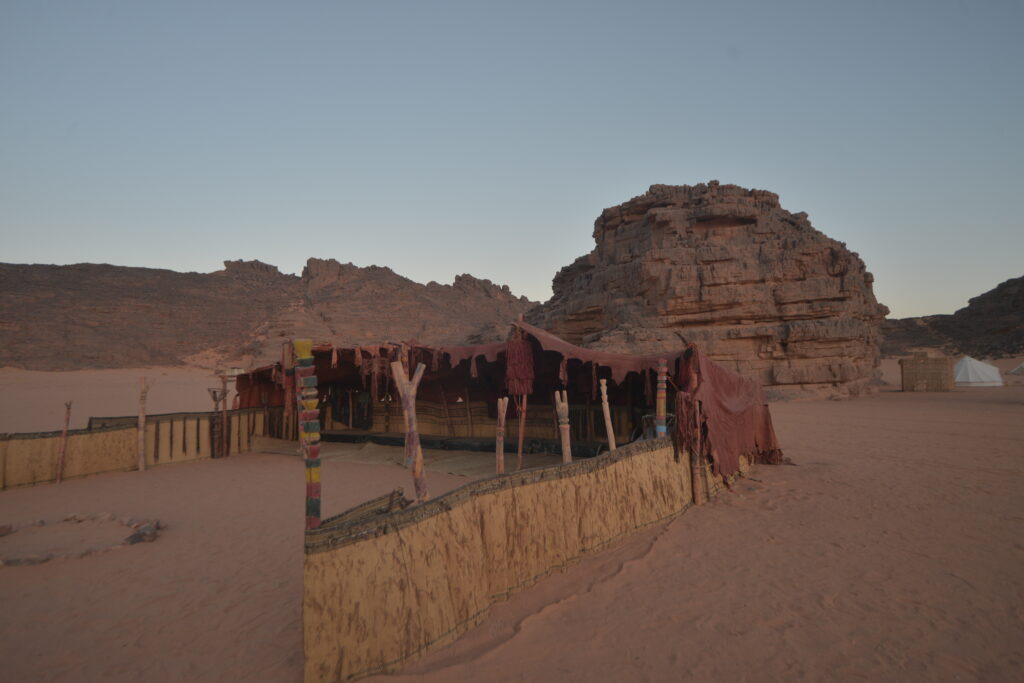
At the end of a full day of shooting, this campsite became our place of rest. The Tuareg men gathered for ceremonial tea, sharing laughter and storytelling — a beautiful ritual marking the end of three unforgettable days capturing this stunning part of the Sahara.
The traditional Tuareg tent, crafted from leather and shaped by generations of craftsmanship, represents a culture deeply rooted in artistry and heritage.
Set among towering rock formations, the campsite is a vision of luxury in the heart of the Sahara. The elegant white tents stand majestically against an endless sea of sand and stone, creating a beautiful contrast between ancient landscapes and modern comfort.
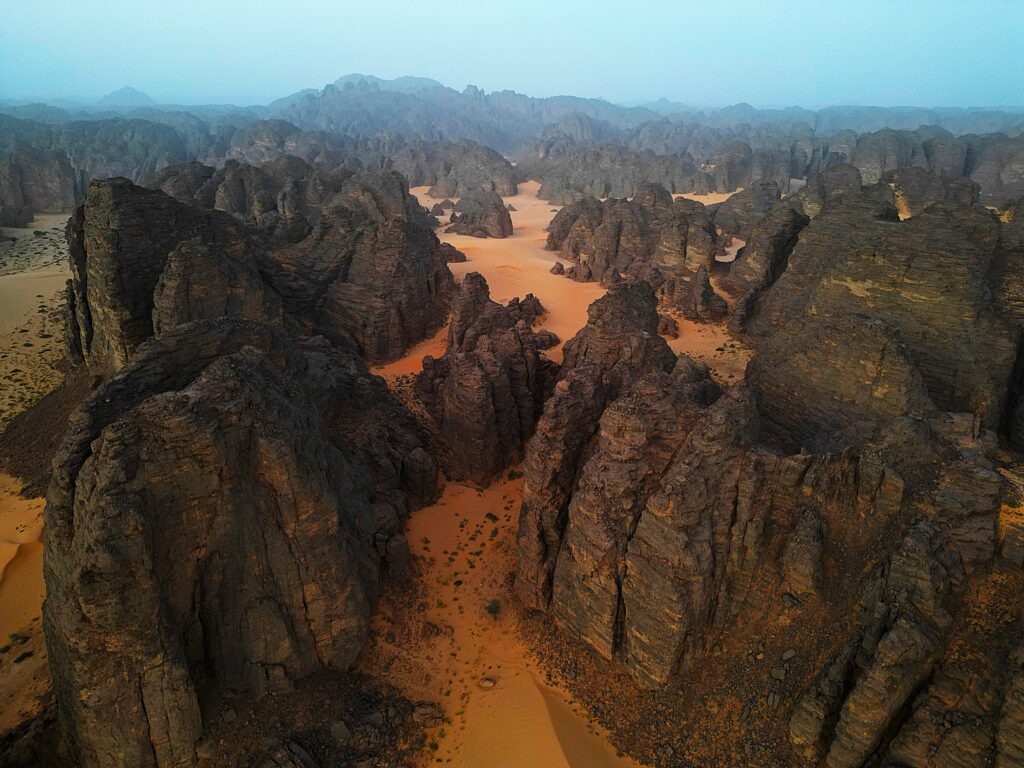
Here, Ouladheddar stood almost ant-like against an endless landscape of carved black rock. Sending the drone above, the true scale of the rock formation here was revealed — a vast wilderness shaped by what was once an ancient underwater world.
Carved by time, wind, and water, these towering canyon walls reveal the extraordinary architecture of nature. In the silence of Tassili N’Ajjer, every passageway holds the memory of a landscape that has witnessed thousands of years unfold.
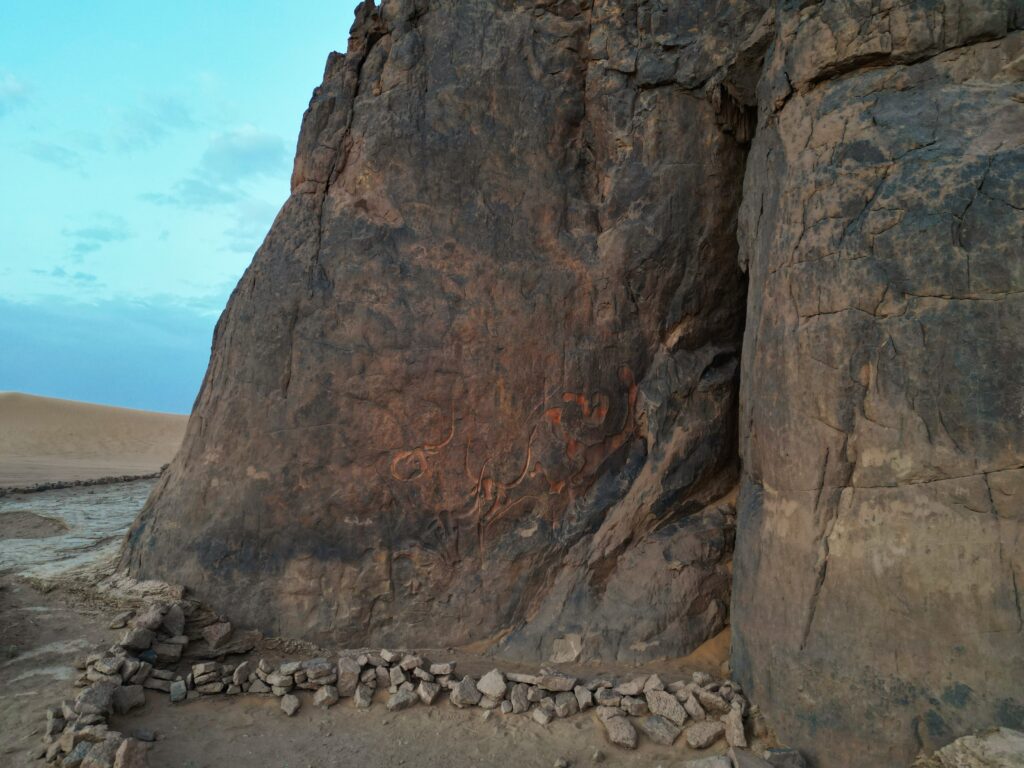
This massive ancient rock formation could only truly be captured slowly, revealing the etching of the legendary Crying Cow — a powerful symbol believed to reflect a changing environment and the deep connection between people, animals, and the land
Every encounter with these ancient markings feels like a mystical connection to the past.
For Djaber Ouladheddar, photographing this as a Tuareg carries a deeper meaning. You could see the wonder in his eyes — the thoughts of someone witnessing the work of his ancestors and sharing their story with the world. His photography feels different because it comes from familiarity, passion, and connection.
He was not simply capturing the Crying Cow; he was admiring the craftsmanship of his people and reflecting on the story behind why this symbol was created. An untold history preserved in stone — a reminder that even ancient rock can carry stories of loss, change, and transformation.
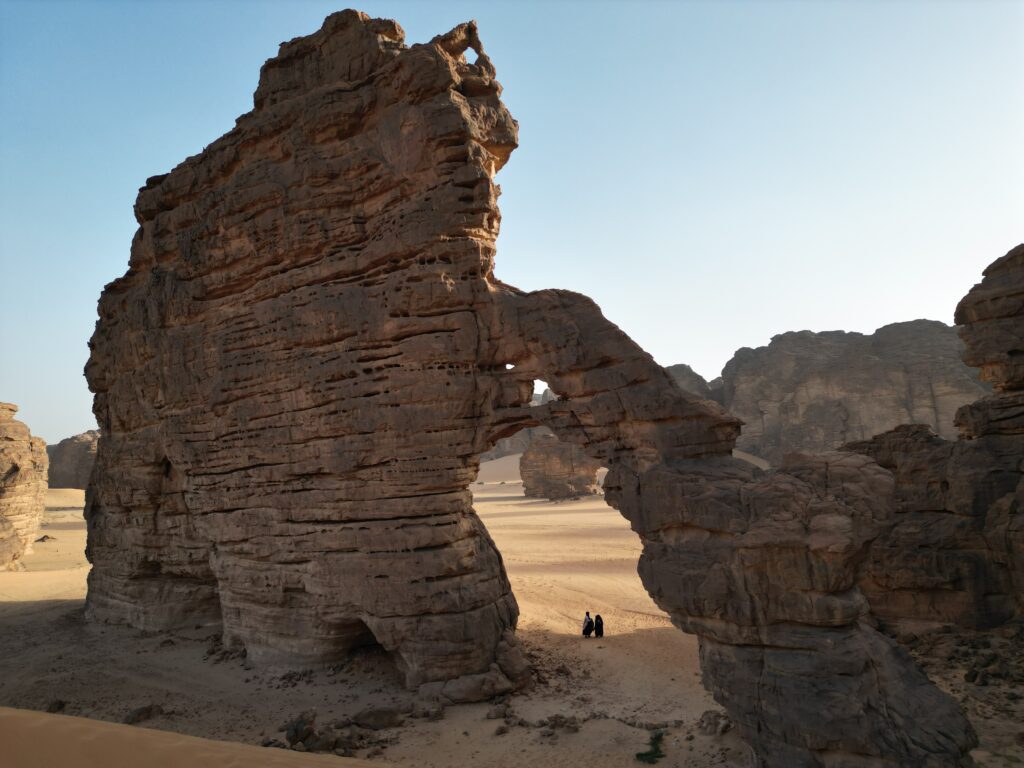
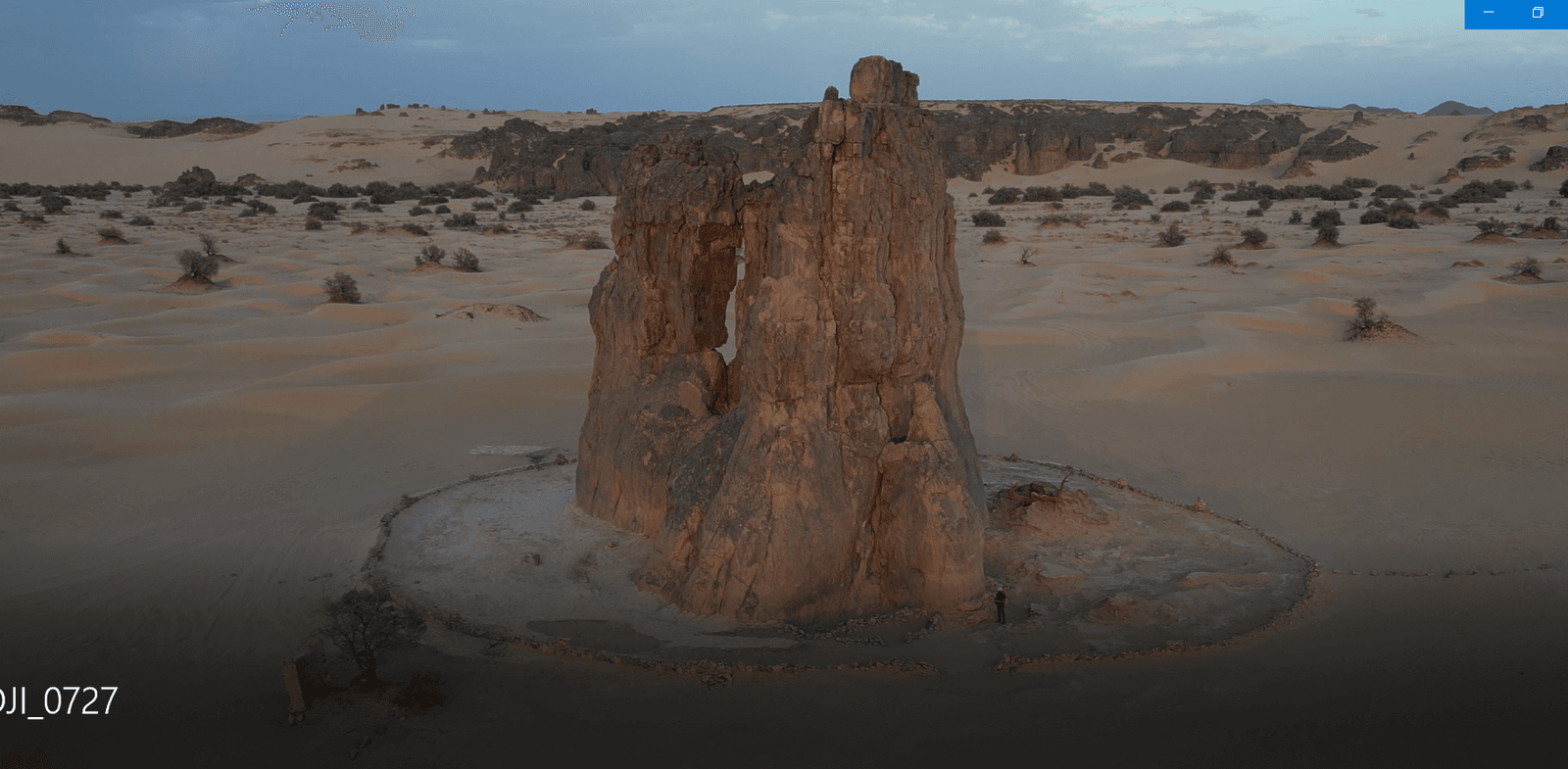
Coming across this giant cathedral-like rock formation literally stopped us in our tracks. We knew instantly this was a defining moment for the Africa Travel and Life shoot.
The landscape was dramatic, surreal, and breathtaking — a rare architecture sculpted only by the hands of God over thousands of years ago. Watching Djaber Ouladheddar photograph this scene felt like witnessing a moment from a film. An elderly woman being carried by a younger Tuareg — perhaps her son — became a powerful symbol of respect, care, and reverence for generations before us.
This image became the cover shot for Issue 2, capturing the essence of Tassili N’Ajjer — one of the world’s greatest prehistoric rock landscapes. Ouladheddar captured it in the only way it could truly be seen: through the eyes of someone connected to the land.
And yes, we played here, laughed here, shared tea here, and created memories of our own. In this ancient corner of the Sahara, we became part of the story — preserving a moment in time that will forever live beyond the desert.
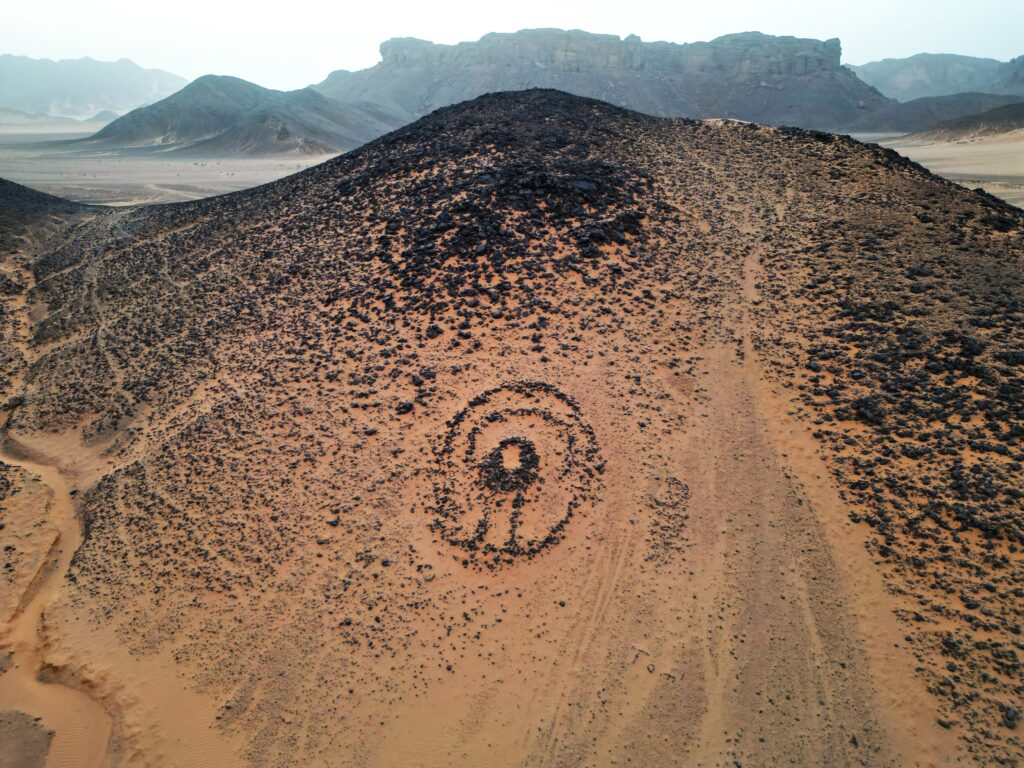
You cannot drive slowly in the desert. The sand demands precision, momentum, and instinct — but when Djaber spotted this site, we stopped immediately.
“It’s where we bury the martyrs. This is something very special,” he said.
We stepped out of the vehicles and watched as he quietly photographed this sacred place. For a moment, the pace of the journey changed. It became less about the landscape and more about honoring those who came before — the people whose lives and sacrifices helped preserve this land for future generations to experience and remember.
Among the vastness of the desert lie places of remembrance. This sacred site connects generations to the history, sacrifices, and enduring spirit of the people who have called this extraordinary land home.
By Nana Mensah