
The Fashionable Vai Script: Where Heritage, Fashion, and Memory Meet Cape Mount
Set against the stunning landscapes of Cape Mount, 'The Fashionable Vai Script' transforms indigenous writing into aesthetic architecture. This visionary editorial blends Liberian heritage, silk, and nature, asking a profound question: what if fashion could be read just like language?
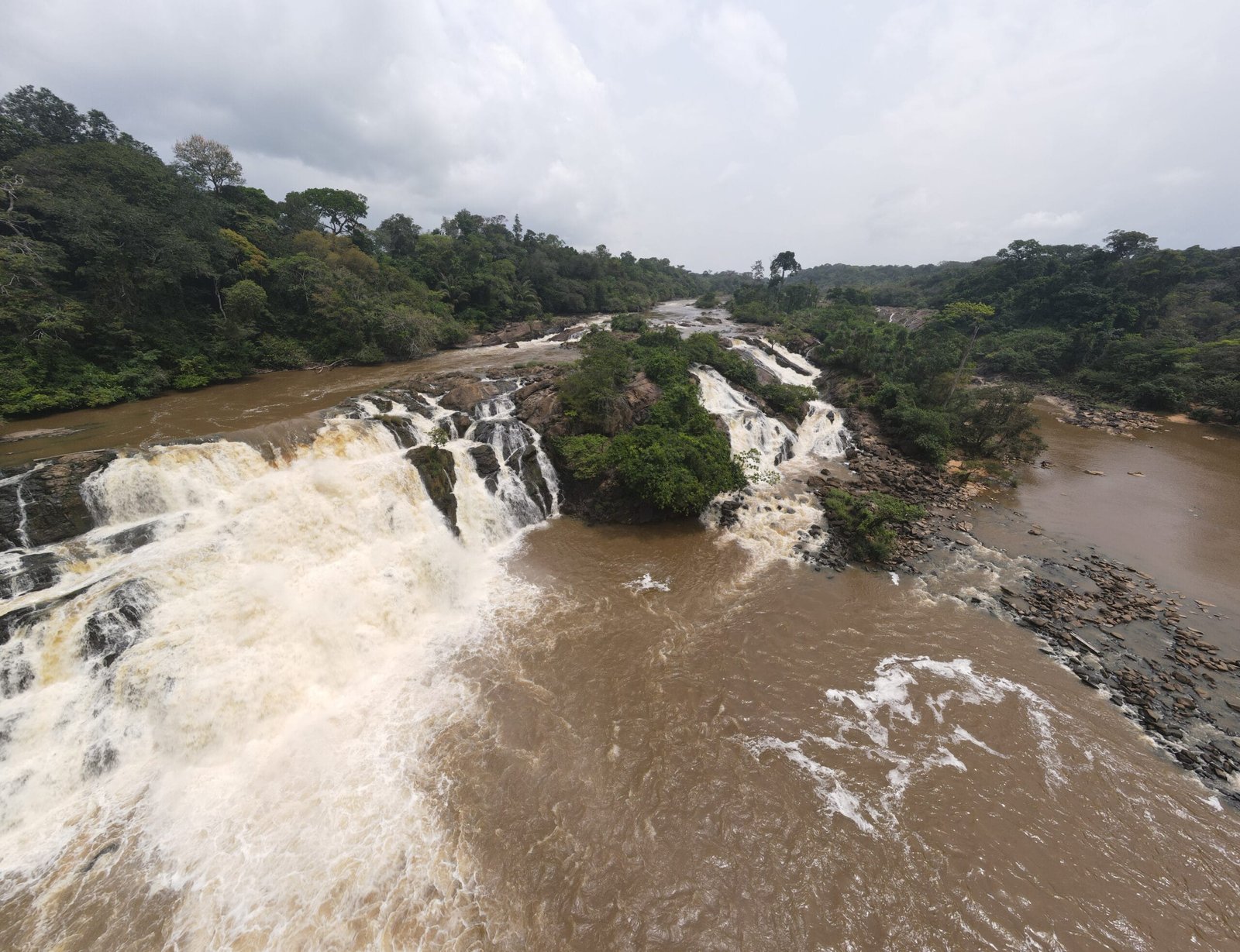
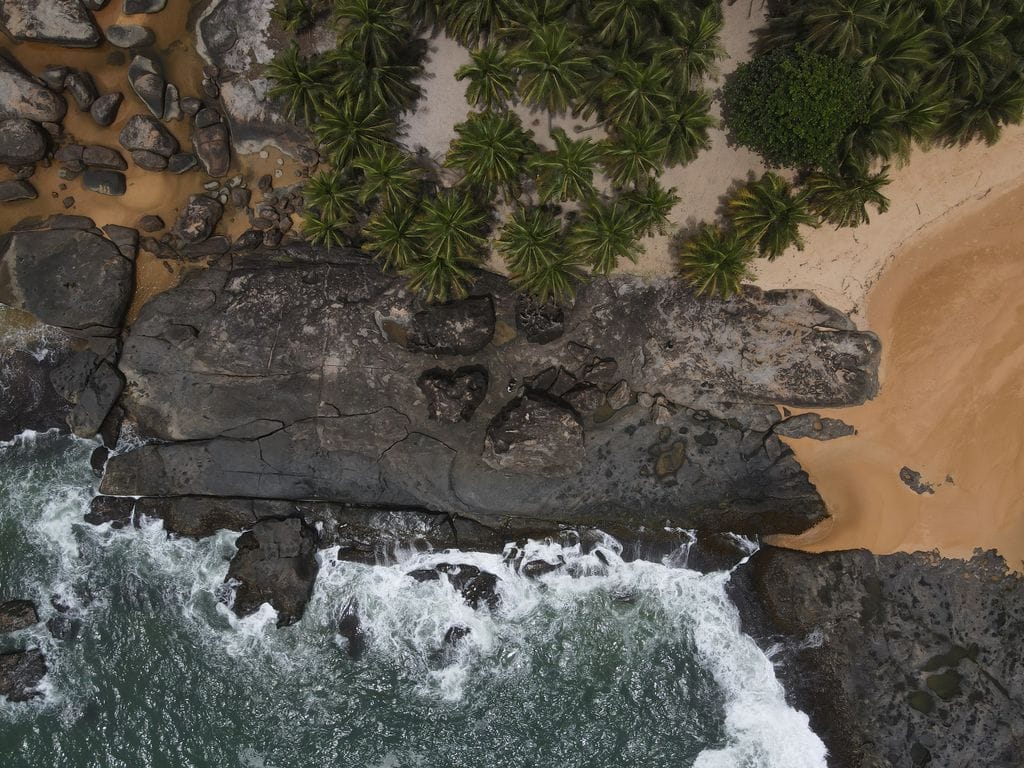
In the far western reach of Liberia, where the Atlantic presses against the land and the hills of Grand Cape Mount County rise into forested silence, a visual story unfolds that is as much about identity as it is about fashion. The Fashionable Vai Script is not simply an editorial—it is a cultural meditation stitched into silk, country cloth, memory, and place.
Conceptualized and creatively directed by Liberian fashion designer Chris Collins—known for designing for former President Ellen Johnson Sirleaf, including her historic first inaugural outfit as Africa’s first elected female head of state—the project brought together fashion, language, and landscape in a way that felt both ancestral and contemporary.
At its core, the editorial celebrates the Vai script, an indigenous writing system developed in the early 19th century by the Vai people of Liberia. It stands as one of Africa’s most remarkable intellectual and artistic achievements: a script born not from colonial instruction, but from cultural imagination and necessity.
This story unfolds in Cape Mount, the homeland of the Vai people, and specifically across the landscapes of Robertsport and its surrounding forested terrain. The production moves through the mythic-feeling geography of the Warkorlor mountain region and the dense beauty of the Warkorlor Jungle, featured in the current issue of Africa Travel and Life’s Design and Style in the Rainforest issue.
Here, fashion is not staged—it is placed.
Dualu Bukele: The Man Between Script and Silence
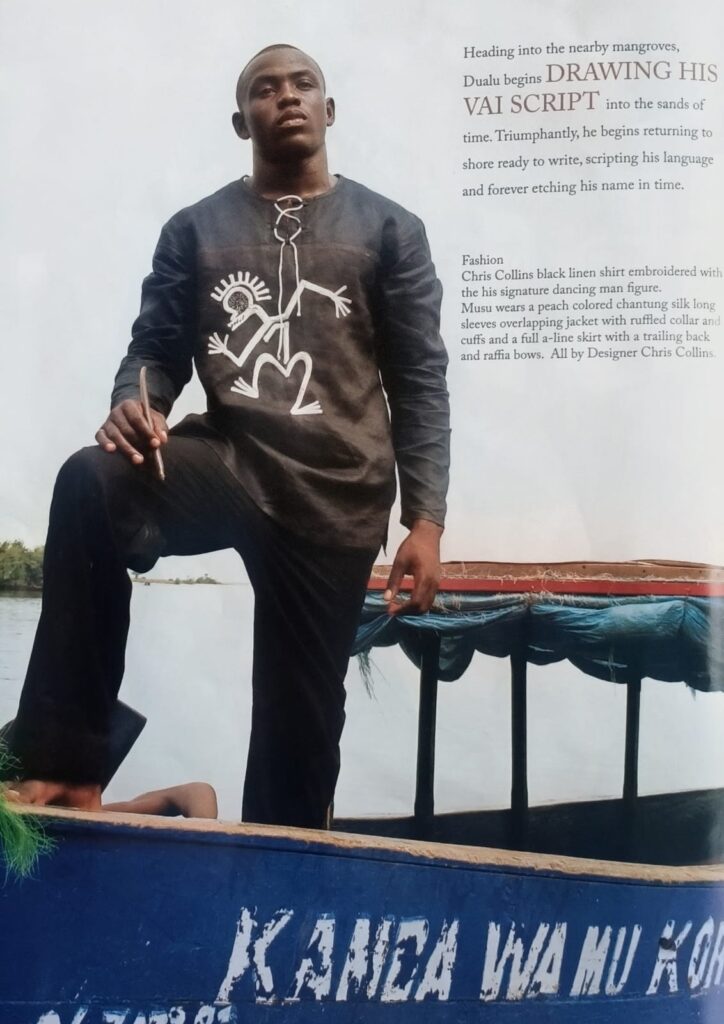
The narrative follows Dualu Bukele, a central figure who embodies contemplation and cultural curiosity. He moves through Cape Mount as if the land itself is a manuscript waiting to be read. He is not merely observing fashion—he is interpreting meaning.
In his journey, he is joined by his sisters Musu and Jebbeh, both carrying Vai names that root them firmly within the cultural lineage of the story. Together, they form a triad of reflection, strength, and continuity—each character representing a different emotional register of the Vai world: thought, resilience, and aspiration.
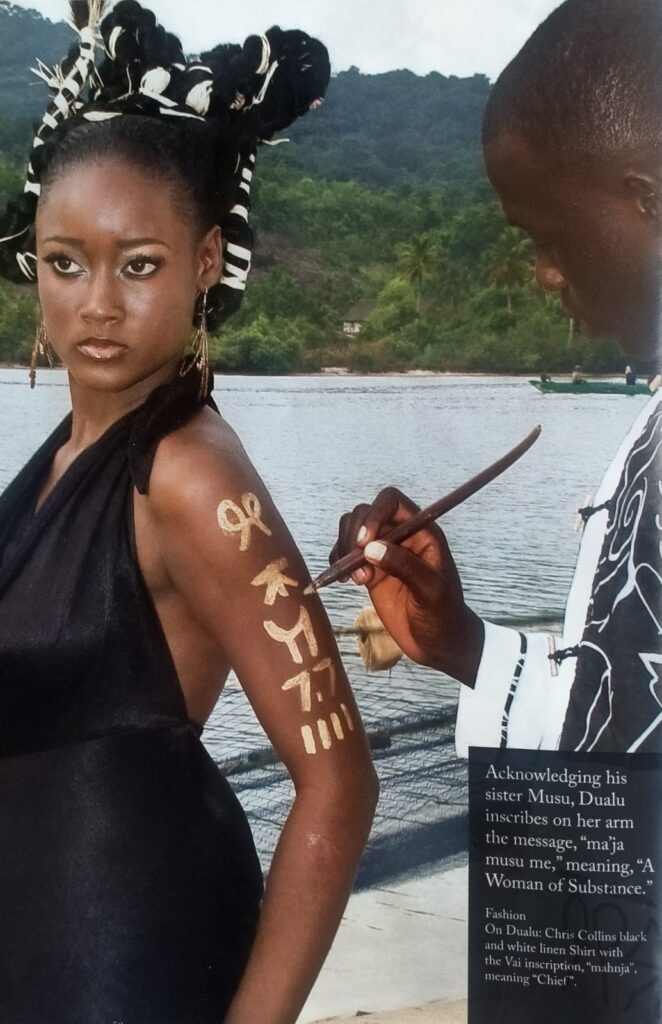
Musu: Strength Written on Silk
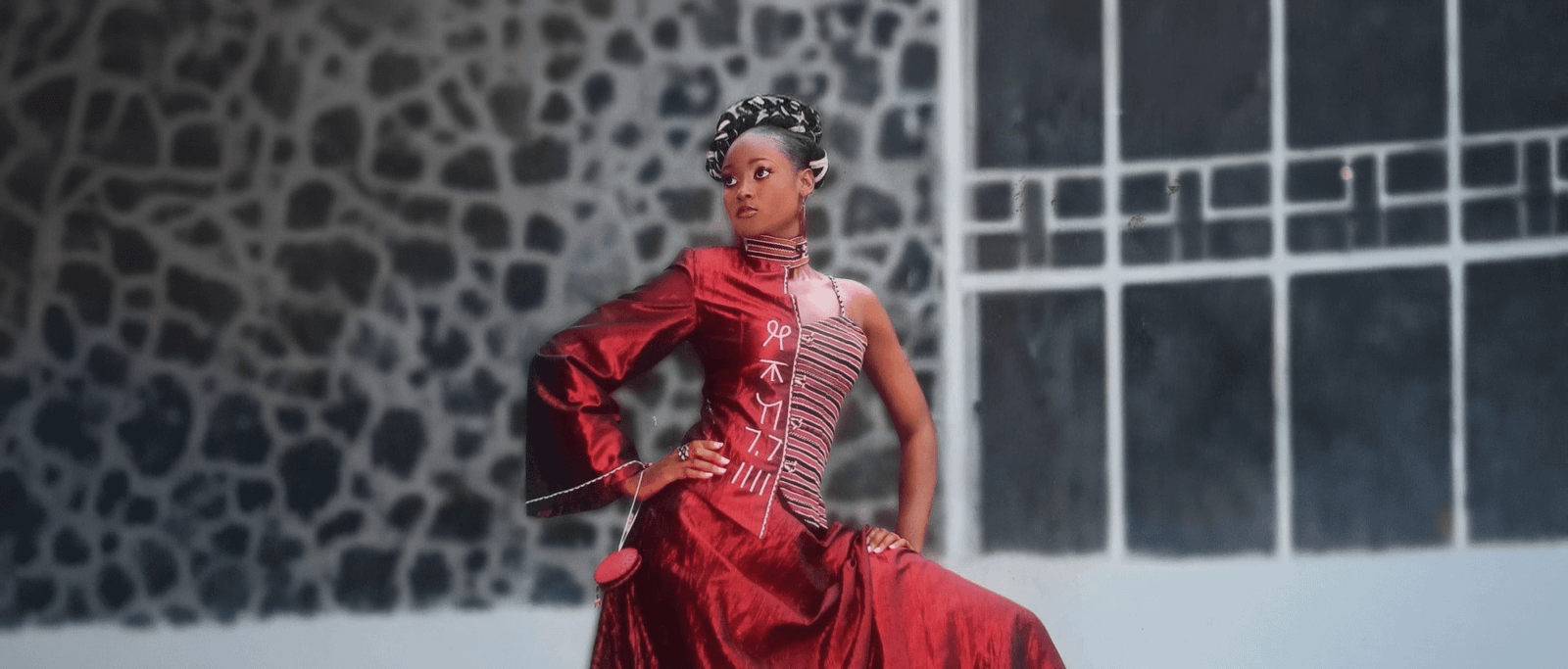
Musu stands against the rock wall of the historic St. John Mission, a school established in 1878 by Episcopal missionaries in the Robertsport, Warkorlor mountain region.
She wears a striking red silk shantung and Liberian country cloth blended two-piece full skirt suit. On her jacket is delicately embroidered the Vai inscription:
“Maja Musu Me” — Woman of Substance.
Her presence is grounded, almost architectural. The contrast between the Liberia turn of the century stone walls and the indigenous textile language she wears creates a dialogue between histories—one written, one worn.
Musu is not styled as a subject of history. She is styled as its continuation.
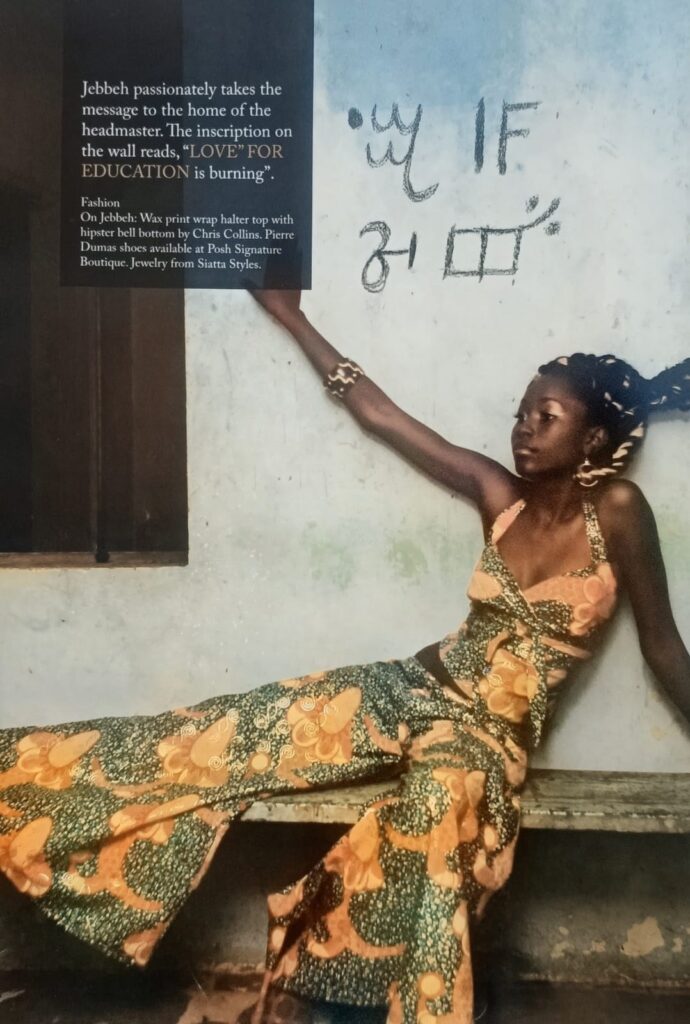
Jebbeh: Education as Flame
At Bethany Girls Mission, another historic institution set within the Warkorlor mountain landscape, Jebbeh sits quietly on a wooden bench.
Behind her, Vai script is inscribed on the wall:
“Love for education is burning.”
Her posture is reflective, almost meditative. She is surrounded by stillness, yet the message behind her is kinetic—education as fire, as persistence, as something that refuses to be extinguished.
Jebbeh’s styling is understated, allowing the weight of language and setting to carry the visual impact. She becomes a bridge between learning and legacy, between inherited wisdom and future possibility.
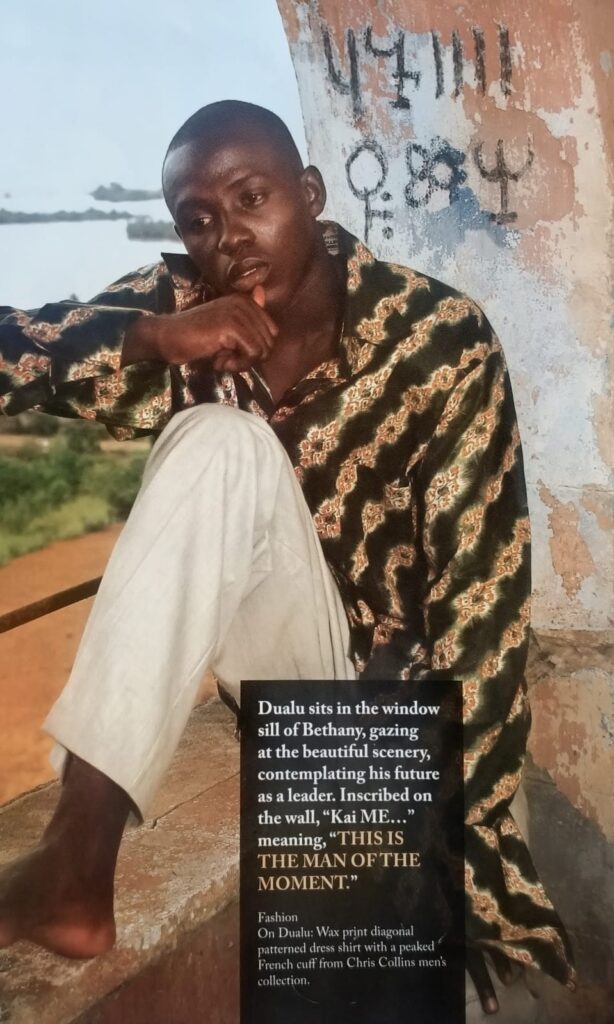
Dualu Bukele: The Man of the Moment
Within the same Bethany Girls Mission setting, Dualu Bukele is framed at a window slit, seated in quiet contemplation. Light filters through the opening, casting him between interior and exterior worlds.
On the wall beside him, Vai script reads:
“This is the man of the moment.”
It is both declaration and question.
He is positioned not as a hero, but as a witness—someone suspended in the act of understanding what it means to belong to a place so layered with history, language, and cultural invention.
The Warkorlor Connection: A Circle Completed
The editorial’s visual language extends beyond individual portraits into the landscape itself. The surrounding Warkorlor Jungle—lush, ancient, and immersive—acts as both backdrop and participant in the narrative.
This terrain is not incidental. It is the same ecological and emotional space where the Design and Style in the Rainforest cover shoot and story for Africa Travel and Life was created. The Fashionable Vai Script was photographed by Finnish photographer Markku Vesikko, whose work continues to echo through Liberia’s contemporary visual storytelling.
His images—rooted in light, texture, and environmental intimacy—form a quiet lineage with this editorial. Though he has passed away, the connection between his vision and this project is unmistakable and forever etched in Liberia’s history. He captured the essence of fashion in Liberia which is never confined to studios. It breathes in forest light, in mountain air, in historical silence.
The symbolism becomes even more powerful when considering the geography itself. The name Cape Mount reflects its position where land meets Atlantic horizon, where mountain meets sea. It is a literal and metaphorical edge—an origin point and a boundary at once.
In this sense, the editorial is not just shot in Cape Mount.
It is completed by Cape Mount.
Fashion as Script, Script as Identity
What makes The Fashionable Vai Script extraordinary is not only its visual composition, but its conceptual depth. It asks a simple but profound question:
What if fashion could be read the way language is read?
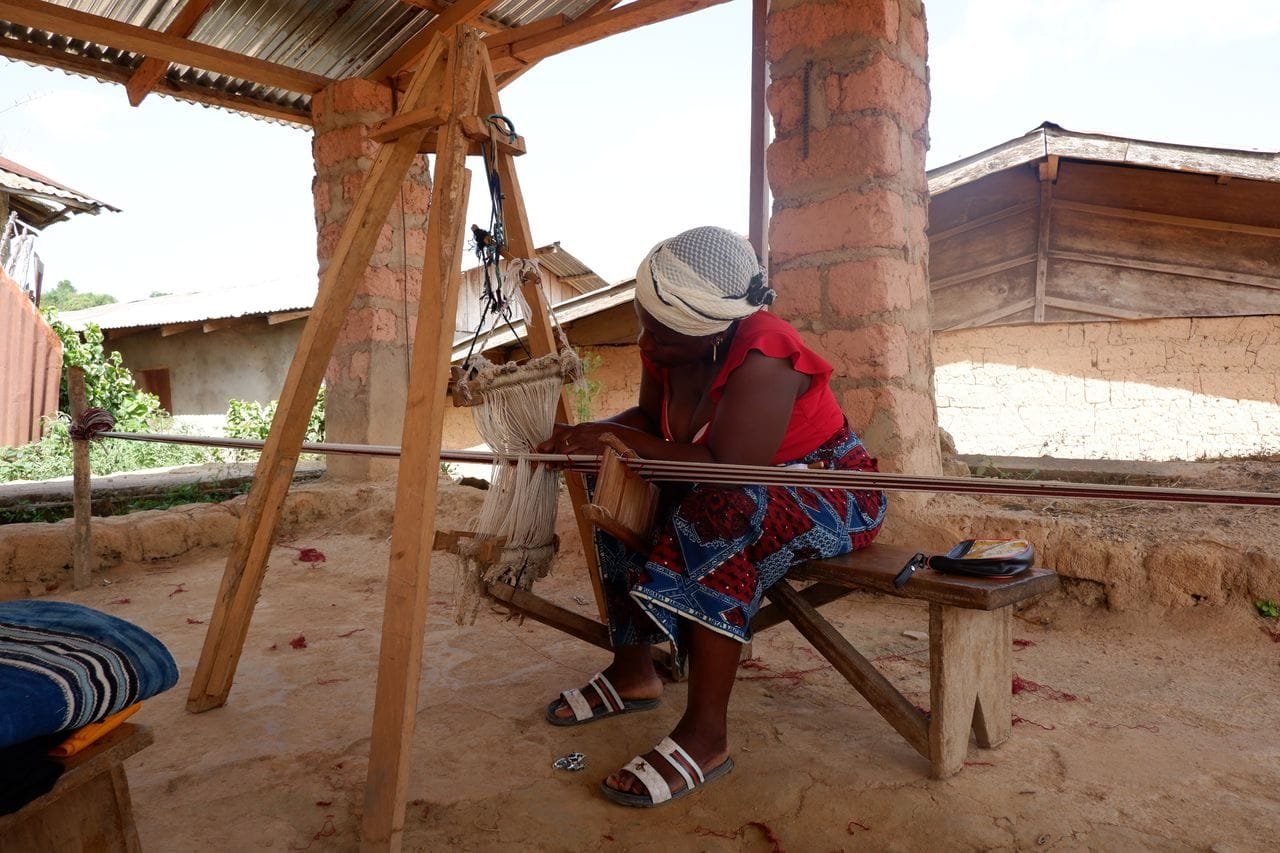
The Vai script becomes more than historical reference—it becomes aesthetic architecture. It appears on walls, on garments, in gestures, and in silence. It transforms clothing into text and landscape into page.
Chris Collins’ creative direction ensures that each frame operates as a sentence in a larger cultural paragraph—one that honors Liberia’s intellectual heritage while placing it firmly in contemporary fashion discourse.
A Full Circle Story
From missionary-era stone buildings to rainforest canopies, from embroidered declarations to ancestral script, this editorial is a circle completed.
Each character carries a different story. Each location carries a different memory. Yet together, they form a unified visual language of Cape Mount—one that is deeply Liberian, unmistakably African, and undeniably global in its artistic ambition.
In the end, The Fashionable Vai Script is not only about what is seen.
It is about what is remembered, what is written, and what continues to speak—long after the shutter closes.
Photographed by Markku Vesikko
Creative Direction by Chris Collins